Mapping out Memories: Using Google Earth to Find Family

According to a March 2012 report in Time Magazine, an Indian man named Saroo Brierley, who was adopted by Tasmanian parents, and lives in Australia, recently found his birthfamily using Google Earth.

Google Earth is a free application, that can be downloaded at Google.com/earth. The application allows users to take virtual tours anywhere in the world.  With amazing clarity, Google Earth lets you explore buildings, imagery, landscapes, waterways, etc.

Brierley left India at five-years-old, and had memories of begging on the streets with his brother. He also had some memory of landmarks that played a prominent role in his childhood. It was these tidbits of memory that had him zooming in and out on Google Earth for ten years, looking for a village that matched his age-washed memories.

He was successful. Brierley found the village, and his birthfamily. He was reunited with them in February of 2012. While Brierley says that communication is difficult, his reunion seems to be a happy one. According to the Time article, Brierley is even thinking of making his story into a movie.

While I cannot imagine that there are many instances where Google Earth is the best search tool on the Web. Brierley’s success does make a point about perseverance, and the crucial step of mapping out your memories.

If you have any memory of your birth family, no matter how vague, you need to write it down. Be as precise as possible with your list. List things as silly as “I had a pink teddy bear” and as identifying as “I heard a train go by everyday.”

By writing down your memories, and those of your family members, you may find clues that will help to narrow your search.  Interview your adoptive parents, and siblings, aunts and uncles, cousins. Every memory is another pin on the map that will eventually lead to your birth family.

Adoptee Rights Demonstration Today in Chicago

If you are in the Chicago area, this is the place to meet like minded adoptees interested in open records for all!

K.'s avatarKaren Pickell: Between

Adoptee Rights CoalitionThe Adoptee Rights Coalition has organized a demonstration to take place today during the National Conference of State Legislators in Chicago. Specifically, they will be trying to open the legislators’ eyes to the plight of adult adoptees in forty-four states who are not allowed to have a copy of their own original birth certificates.

What is an “original birth certificate?”

Many people who are not intimately affected by adoption do not realize that adopted people have two different birth certificates. Whenever a child is born, a birth certificate is issued to legally record that birth. We all know that, right? At minimum, the birth certificate lists the baby’s name and the name of the child’s mother.

If that baby is later adopted, a new birth certificate is issued which lists the child’s adoptive name, and his adoptive parents’ names as mother and father. The original birth certificate–the one that lists…

View original post 956 more words

Adoptees Use DNA Testing to Find Relatives

When I was searching for my birthfather, there were two possible culprits. My birthmother was a virgin when she arrived in the USA, and as naive as they come.  She met a nice man through a cousin, and he asked her to take a stroll on a NY beach.  During this walk, he raped her.

After her heart and trust was stolen, she decided that no man would ever take advantage of her again.  She had been attracted to an Army man, who wooed her endlessly, and after the horrible beach incident, she decided to pursue a relationship.

ynse/Flickr.com

So when she found out she was pregnant, she was not sure who my father was.  This left me with the difficult task of figuring it out. I found the date rapist first. He was actually a nice old guy, and swore that while he had dated my birthmother, there was no rape.  He had heard she was pregnant, and wondered if he might be a father.

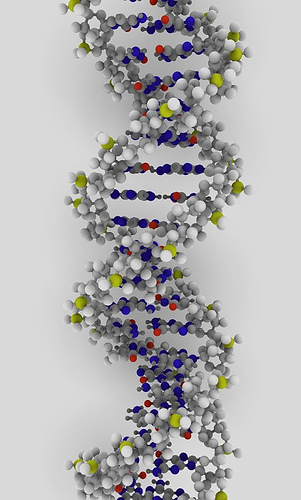
When I found him, we had DNA testing done, and the negative result was heartbreaking, as he was truly tickled to have a newfound daughter.  We used the Fairfax Identity Lab.  I then went on to find my real birthfather, and he never wanted DNA testing. I knew he was the one, and therefore it was not necessary.

While DNA played a factor in my search, it was not the clue that opened the door to my identity. To find my birthmother and both father suspects,  took 13 years of pretty hard searching. Today, I am amazed at the level of identity and at the specific surnames that can be found through the process.

A New York Times article from January of this year, tells how adoptee Khrys Vaughan found her distant cousins using a DNA testing company, that not only provided her genetic countries of origin, but also gave her the names and email addresses of distant cousins.

The article suggests that testing can cost anywhere from $99 to more than $500.  Most of the companies I found are in the $300 range.  While I do not know anything about the reliability of these companies, the Times article mentions two testing companies; Family Tree DNA and 23andMe, claiming that “they  have databases that contain samples from 350,000 and 125,000 people.”  Those are pretty good odds for a match.

Note: Companies are competing for your DNA dollars. They do NOT share databases, so you might want to be tested by more than one.

My concern with these DNA companies is of course, accuracy. I had the same concerns back when I used DNA to confirm my birthfather’s identity.  However, I believe that the process has come a long way, and for those who have tried every other search avenue,, this could at least fill in the blanks as far as your real nationality.

Tread carefully, and ask around before coughing up the cash. I have added links to the two companies mentioned in the article. I may even give this a try in my effort to find my adoptive brother’s family. Of course, if I do, I will report my findings here.

Happy hunting and blessings,

Vicki-lynn

Are You a Missing Person?

A 35-year-old adoptee named Steve Carter got the shock of his life, when he decided to search for information regarding his birth.

Adopted at the age of four, from a Hawaiian orphanage, Carter came across the story of an adoptee who discovered that she had been kidnapped, and was adopted illegally.  His intuition kicked in, and Carter decided to look around some missing kid sites.

Carter found the site, MissingKids.com, did a search or two, and found an age-progressed photo that was his spitting image.

Sadly, his birthmother is also missing, and seems to have been on the run with him as a baby. She was later put into a psychiatric ward, and eventually disappeared from the system.

You can read more about Carter’s story at The Blaze.com and at The New York Daily News.

The moral here is to trust your instinct.

I have often wondered about a couple in my neighborhood who adopted their white, newborn babies  lickety split.  The adoptive mother claims, “we got each of our kids in less than a month.” When I asked her if she thought this strange, she did not even flinch.  Bought? Kidnapped? Luck?

If you were placed with your adoptive family later in life, or have a feeling that something does not gel, go to the missing kids website and take a look.  You might save someone from a lifetime of unimaginable heartbreak.

Why Adoptees Search: Videos of Hope & Reunion

When the road is hard, and there seems no chance of reunion, why do adoptees persevere?

Today, I remind you that your journey to wholeness is possible, relevant, and necessary.  These touching videos are about adoptees who have succeeded.

Get out the tissues, as these stories are what your dreams are made of.

Adoption Reunion after 53 years:
six siblings found

Adoptee Reunites with her Mom

Tammy’s Book:
A mother & daughter reunion

Search Tip: Find an Adoption Reunion Search Angel

Searching for your birthfamily is time-consuming and costly. However, there are volunteers out there that will assist you with the process. They are called Search Angels.  Usually, adoptees or birthparents themselves, these volunteers offer guidance that can shorten your search by years.

sun dazed/Flickr.com

This search tip offers links to find a Search Angel, and advice on how to proceed once you do.

1. Get organized. Have all of the information you’ve gathered about your adoption ready. I often get email requests that are vague. To help,   I need the adoptees gender, plus date and place of birth. Once I have this, I can recommend specific search actions.

2. Find an angel.  Often the best place to find a reliable, useful angel is in reunion forums.  Search for local adoption reunion forums for your state as well. Also see the links listed at the end of this post.

A few national forums include:

3. Ask the search angel for references, or search  forums like those at adoption.com. Sign up for a free account to post an inquiry.  There is a current post on the support forum about a scam angel named Alex Shan.  Search your angels name in these forums, and Google their name to see if there are complaints.

4. Never share your address, or social security number with a search angel.

5. Ask about expenses. Angels are supposed to be free, but some ask to be reimbursed for travel.

6. Do not expect that a search angel will spend all of their time working on your search. Most offer advice, and tips for moving forward. Some will plug away at your search for years. Remember that a search angel is not a professional, they are volunteering to help you.

The sites below will help you find a search angel.  Of course, you should Google by state as well, (example- ‘Florida Adoption Search Angels’) since many volunteers work only in the state where they reside, or where they have search experience.

If you know of other Search Angel directories, let me know and I will add them.

West’s NEED for Children Brings Pain to Nepal’s Families

In Nepal, child trafficking is a national crisis. Children are being purchased from poor parents for as little as $15, and sold to children’s homes in Kathmandu. Parents are persuaded that their children will have a  better life in, and sell them in hopes of a bright future.

Drnantu/Flickr.com

According to an article at RT.com, there are, “around 15,000 children living in orphanages in Kathmandu.” At least 500 orphanages exist in the area, and only eleven  are regulated by the government. Conditions in the orphanages are treacherous, with care givers rationing food, and beating children.

So what makes these children so valuable a commodity, that they’re being rounded up by the thousands?

The need/demand for adoptable children in the West is causing this human tragedy. A family abroad in willing to pay $25,000 for one child. Therefore, children who already have parents are being purchased, and forced to live in slum orphanages.

To make matters worse, the Nepalese government currently “has a freeze on child adoption to Western countries due to rampant cases of abuse, fake documents and false statements.”  So the children are no longer with their biological parents, and have no hope of being adopted by the rich Western family their parents were promised.

Horrible, deplorable, despicable… all  of these words understate my outrage.  I am not faulting Western families for wanting children, but I wonder how this demand for babies is playing out in other countries.  Surely, Nepal is not the only country where crooks recognize the opportunity to make money from selling kids to the West.

Adoption must become a centralized process, with an international group overseeing it. Of course, we don’t even have a centralized system for adoption in America, (every state has its own rules &  baby brokers still exist) so standards, legislation, and protective processes for worldwide adoptions are as likely as Bigfoot knocking at my front door!

When a North American or European family dolls out $25,000 to adopt a child internationally, what is the human cost?

Adoptee Search Tip: How Non-Identifying Information Identifies

Today, I want to explain the importance of obtaining a letter of non-identifying information from the agency that placed you. Of course, adoptees in search, must first figure out who handled their adoption. This could be  a lawyer, state agency, private agency, or religious organization.

GlasgowAmateur/Flickr.com

Do whatever it takes to find out which agency, lawyer, or placement provider handled your case. Ask every relative, dig through family files, the family bible, safe deposit boxes.  You might even consider volunteering to clean out your adoptive parents attic!

Once you know the agency that handled your transition, it is time to track down the current address, and contact information for that organization.  Once you have that, I recommend starting with a phone call, to ask about their policy for giving adoptees access to their  “non-identifying” information.

In most cases, agencies will provide you with a letter that includes some information on your birthfamily.  Often, you will have to make the request in writing, and there could be a fee.

You may wonder why you’d want a letter than lacks identifying information. Well, considering that you are starting at zero, this letter is a great starting point. You have no clue what your birthmother was interested in, if she was in school, what her job was, where she lived or whether or not your birth grandparents were aware of your birth.  All of this, and more is often included in a letter of non-identifying information.

When I was searching, I received my letter from the Children’s Aid Society in New York City.  My letter included the number of siblings my birthmother had, as well as the occupations of my uncles at the time of my birth.  It also revealed that she was from a “small town in Canada” and that her “father worked in a hardware/grocery store”.

Additional information revealed that my birthmother was a shy, timid girl, with blonde hair and brown eyes, and that she had no way to care for me, and gave me up so that I would have a “good family”.

While the information may seem vague, the clue that led me to my birthfamily was in that bare-bones information.  Also, tucked in my letter, was the only photo I have of me as a young infant. On the back of that photo, was a surname, one that I had heard all of my life.  My adoptive parents were told my birthname was Richards.  The photo confirmed this (as did a trip to the Birth Register books  at the NY Public Library).

I reread my letter a thousand times (0ver a 7 year period), checking and rechecking for clues, and just when I thought it was useless, my search angel asked me to read it again. I read it aloud to her, and she stopped me at the part that read, “One of your mother’s brothers was a wireless operator.”

My search angel asked me, “What’s a wireless operator?” I did not know, and she suggested that I contact the Federal Communications Commission (FCC)  in Washington, DC.  A very nice man at the FCC explained that a wireless operator in Canada would have required a license, and that I should contact the Canadian Communications Commission.

I called the CCC once, and hung up when a woman answered in French.  Later, I wrote a letter explaining that I had a medical issue, and that I was looking for a Richards male who was a wireless operator in eastern Canada during the year that I was born. I picked eastern Canada because I was born in New York.

I received a written reply in June of 1991.   There were only three Richards men who had wireless operator licenses the year I was born.  The man who wrote the reply, happened to know one of the Richards men. He wrote that  M. Richards still worked for the government, and provided me with his telephone number. M. Richards turned out to be my Uncle.

Every non-identifying letter is different. Some are  detailed, some vague, and some arrive with  secrets revealed, and even surprise photos.  There are social workers, lawyers and judges who recognize the significance of knowing your genetic history, and some will beef up non-identifying info with clues.

Get the request in as soon as possible, and make sure you check with the agency  for procedures.  Once you get your letter, look at occupations (especially those that require a license) and at schools.  Was your birthmother at an art school, nursing school, secretarial school?  How many siblings did she have? These are all revealing clues, that can narrow your search.

Of course, if you get your non-identifying information, and have no idea where to start, I am happy to give you a little advice. Feel free to email me at vbrunskill at gmail.com.

Happy hunting!

All rights reserved: Copyright 2012 Vickilynn Brunskill

RI Adoptees over 25 Years Allowed Original Birth Certificates

Adoptees searching in Rhode Island take note. It was announced yesterday in the Providence Journal that any adoptee over the age of 25 can now request a non-certified copy of their original birth certificate.

TheGirlsNY/Flickr.com

According to the article, the certificates will not be released until July. However, the health department is announcing the opportunity now, so that adoptees can send in forms early.  There will likely we a deluge of applications, and the sooner you mail in your request the better.

Information on the new law, which takes effect on July 1, 2012, can be found on the State of Rhode Island, Department of Health site.  The forms for requesting your original birth certificate are available here as a Word document . The cost of the request is $20.00.  From the site instructions, it sounds like you can choose between in-person pickup and mailing of the document.  Only the adoptee themselves may receive the document. No other persons will be granted access to the certificate.

Of course, a birth certificate does not guarantee that you will find your birthfamily. However, you will have the correct names to get started.  Also, if your birthparent has filed a contact preference form, you will be sent that along with your birth certificate. This could include a contact address.

Kudos to RI legislators, as this is a giant step in the right direction! We can only hope that many more states follow suit.

UPDATE: One of our readers was kind enough to give additional information. He wrote, “Another valuable piece of information for RI adoptees to note is the RIARG group, RI Adoptee Resource Group, which provides support and resources for local adoptees in a variety of ways. This groups can be found at the following link: https://sites.google.com/site/riadopteeresourcecenter/home.” Please see the reply below by rhodeislandadopteeresourcegroup.

Searching Reunion & Mutual Consent Registries

Adoptees, whether you know your birth surname or not, get thee to the Internet!  With an upsurge in adoption reunion registries, more and more birth parents are posting.  This means, that the person you seek, may  already be looking for you!

After you search each of the registries, post your information on as many sites as possible.  The more places you post, the more likely you are to be found.  In every post, include your date of birth, gender, city of birth and for surname use “UNKNOWN.”

An example posting would be:

Baby Boy born 3/13/1968, 03/13/68, March 13, 1968 at New York Hospital in Manhattan, NY searching for birth family. Contact Vicki at xxx@yahoo.com

Notice, that I list the date of birth in three formats (X/XX/XXXX, XX/XX/XX and Month, Day, Year) so that it will appear in all search formats.

Use a contact email that is not temporary and keep a list of the places (and passwords) for your posts so you can update contact information as needed.  The Internet is a powerful tool.  I have used forums, reunion registries and ZabaSearch.com to facilitate several easy reunions.

In addition to private registries, many states have state run registries.  Often called ‘Mutual Consent Registries’  these registries often charge a fee. Most state registries will inform you if the information you enter (online or through a printed form) matches the information of any birth family member that is registered.

Some states also have programs similar to reunion registries called ‘Confidential intermediary (CI) programs’.  An intermediary is someone who acts on behalf of adoption triad members (adoptee, birth parents, or adoptive parents). These individuals are authorized by law to help with a search and contact other members of the birthfamily. He or she can access sealed adoption records to conduct a search. These programs protect records and those who do not want to be reunited. Therefore, consent must be obtained from both parties in order to release information and facilitate a reunion.

Available State reunion registries and intermediary programs available as of this writing include:

* Arizona: http://www.azadoptionlocator.com/111510CIDirectory.pdf

* Arkansas: (PDF form) https://dhs.arkansas.gov/dcfs/heartgallery/CFS_434_Jan_15_03.pdf

* California: http://www.dss.cahwnet.gov/cfsweb/PG1314.htm

* Colorado: http://www.cdphe.state.co.us/certs/aboutadoptionregistry.html   

* Florida: http://www.adoptflorida.com/Reunion-Registry.htm

* Georgia: http://www.ga-adoptionreunion.com/

* Illinois: http://www.idph.state.il.us/vitalrecords/adoptioninfo.htm

* Indiana: http://www.in.gov/isdh/20371.htm

* Iowa: http://www.dhs.state.ia.us/Consumers/Child_Welfare/Adoption/AdoptionRecords.html

* Louisiana: http://www.dss.louisiana.gov/index.cfm?md=pagebuilder&tmp=home&pid=116

* Maine: PDF application http://www.maine.gov/dhhs/boh/phs/odrvs/vital-records/documents/adoption-reunion-registry-application.pdf

* Maryland: http://www.dhr.maryland.gov/ssa/adoption/mutual.php

* Michigan: http://www.michigansearching.com/MCAD.htm

* Nevada: http://www.dcfs.state.nv.us/dcfs_guide_reunionregistry.htm

* New Jersey: http://www.state.nj.us/njfosteradopt/adoption/registry/

* New York: http://www.health.state.ny.us/vital_records/adoption.htm

* Ohio: http://www.odh.ohio.gov/vitalstatistics/legalinfo/adoptreg.aspx

* Oklahoma: http://www.okdhs.org/programsandservices/postadopt/docs/adoptreg.htm

* Oregon: http://www.oregon.gov/DHS/children/adoption/adopt_registry/registry.shtml

* Pennsylvania:

* Rhode Island: http://www.courts.ri.gov/family/adoptreg.htm

* South Carolina: http://www.southcarolinaadoptions.com/RegistryForm1.html

* South Dakota: http://dss.sd.gov/adoption/adoptionregistry/

* Texas: http://www.dshs.state.tx.us/vs/reqproc/adoptionregistry.shtm

* Utah: http://health.utah.gov/vitalrecords/pictures/forms/adopt.pdf

* Vermont: http://dcf.vermont.gov/fsd/vermont_adoption_registry

* West Virginia: http://adoption.childhswv.org/AdoptLaw/al_confidentb.htm

* Wisconsin: http://www.icareregistry.com/

If your state is not listed, I was unable to find a state run registry.  However, many other reunion registries exist.

The largest national reunion registries include:

Warning- do not offer any additional personal information online. You have no choice but to include your birth date. However, you should be careful not to use an email address that is an identifier. For example an email with your first and last name.  You should only include your first name and might even consider creating a g-mail or yahoo account just for search correspondence.  Criminals would love to get a hold of your birthdate, place of birth and full name. Always be sure to keep your search posts to only basic information.

Get out there today! Search and search again for reunion registries in your state and sign up for every one you can find. If you find a broken link, or know of another useful registry, please comment on this post.

Copyright 2012- adoptionfind/Vicki-lynn Brunskill