Great News for Ohio Adoptees

Get ready Ohio adoptees born between Jan. 1, 1964, and Sept. 18, 1996. An open records bill has passed in the Ohio House and is heading to Governor John Kasich, who is expected to sign it into law.

All members of the adoption traid are encouraged to contact the Governor using the contact form link here- http://www.governor.ohio.gov/Contact/ContacttheGovernor.aspx 

Let him know why this law is important to you, and be sure to thank him when he signs it into law!

Read the full story here-

Bill granting 400,000 adoptees access to birth records clears General Assembly, heads to Gov. John Kasich for signing

Blessings for a season of hope, and reunion,
Vicki-lynn

It’s Nightmare Adoptive Parent Week on Dr. Phil

So far this week, the Dr. Phil Show has showcased two horror stories about adoptive parents who harmed the children they pledged to raise. I am not a regular Dr. Phil watcher but this week’s story lines captured my attention since each episode showcases an absolute failure of the adoption system, and the need for better screening, enforcement and mandated checks on families AFTER the adoption is final.

The suffering shared on yesterday’s show made me so angry that I ended up yelling at the screen.  Well gosh golly, I found me a racist sexual predator and ignorant wanna-be mother! Gee whiz, let’s give that couple a kid. UGH!

There are many abusive blood parents in the the world too, but there’s something about the abuse and neglect of children at the hands of adoptive parents that makes me insane! When a couple is gifted and assigned to act as legal guardians of a child, they better be ready to walk-the-walk, talk-the-talk, and put in the hard work required to parent that child until they are 18-years old. Failure to do so is an unforgivable sin against the birth parents who could not or would not raise the child.

No matter the source, child abuse results in scars. However, the scars suffered by children adopted into ‘safe’ homes and abused by the very people meant to protect them is a scar on society and the entire adoption system.

Sharing the links and summaries from the Dr. Phil Show below.  The adoption system is just not working folks. If you are one of the happy, bappy, believers that the system is a wonderful fix for needy kids, watch these episodes

Turning a Blind Eye?

Thirty-five-year-old Tonya says from ages 5 to 15, her adoptive father, Bruce, molested her — and that despite her cries for help, her mother, Kathy, did nothing to stop it. Kathy admits that she believed her daughter’s claims but was too afraid to take action. Why did she allow Bruce to live in the same house as her daughter — even after he allegedly admitted to the abuse? Tonya says she was not only betrayed by her mother but also her half-sister, Sarah, Bruce’s biological daughter. Tonya claims that Sarah continued to support her father after he pleaded guilty to sexual acts on or in the presence of a child under 16 in a lewd, lascivious or indecent manner. Tonya faces Kathy and Sarah on Dr. Phil’s stage. Can she find forgiveness and finally heal the wounds of her painful past? Plus, hear from Bruce, who served one year in prison and 10 years of probation and is now a registered sex offender. Does he have any remorse? This show contains strong sexual content. Viewer discretion advised.

Tuesday – August 20, 2013

Missing or Murdered: Where is 15-Year-Old Erica?

In a daytime exclusive, Dr. Phil sits down with the adoptive parents of 15-year-old Erica Parsons, who was last seen nearly two years ago but was only recently reported missing — by her brother. Casey and Sandy claim their daughter is alive and well and has been living with “Nan,” a woman who they believe is Erica’s biological grandmother. So, where is Nan? And, why do these parents say they’re now being accused of murder? What really happened to Erica?

Blessing for placements that protect,Vicki-lynn

SC Cherokee Adoption War: Reader Comment on Father’s Rights

Yesterday, I blogged about the South Carolina case of  Matt and Melanie Capobianco’s custody war against birth father, Dusten Brown. The case has garnered mainstream press attention because the birth father is Native American. Brown’s attorneys used the Indian Child Welfare Act in their fight to secure custody of his daughter who was adopted by the Capobiancos.

My post resulted in 21 thought-provoking, fact laden comments that prove the case should not have been fought on the basis of Brown being Cherokee, but on the fact that he fought for his child from the start. Press accounts make it sound as if he stepped into the child’s life when she was one or two-years old. This is not the case.

So with tail between my linguistic legs, I apologize for the tone of yesterday’s post. For while it never suggests that the child is better off adopted, it does have a tone that could be taken to support the adoption of kids that do not need adopting.  I read several mainstream reports on the case, but failed to dig deeper before tip-tapping my opinion onto the screen.

I still don’t believe in a law that suggests children must be placed with their ‘own kind’. A policy like this would leave more kids in the social service system than ever before. However, in this case, it is Brown’s status as biological father and not as Cherokee that gives him the right to raise his child.

This lengthy comments spells out the father’s case. Thanks to reader ‘Smoke’  for submitting.
Smoke | August 8, 2013 at 4:43 pm | Reply | Edit

1. “He signed his rights away.”
TRUTH:
“It is undisputed that the only consent document Father ever signed was a one-page ‘Acceptance of Service’ stating he was not contesting the adoption, which was purportedly presented for Father’s signature as a prerequisite to the service of a summons and complaint. Thus, Appellants did not follow the clear procedural directives of section 1913(a) in obtaining Father’s consent. Moreover, even if this ‘consent’ was valid under the statute, then Father’s subsequent legal campaign to obtain custody of Baby Girl has rendered any such consent withdrawn. Therefore, neither Father’s signature on the ‘Acceptance of Service’ document, nor his stated intentions to relinquish his rights, were effectual forms of voluntary consent under the ICWA.” – South Carolina Supreme Court There is a legal way to “sign away rights” for good reason, Dusten never came close to any legal relinquishment of parental rights.

2. “He texted his rights away”
TRUTH:
In no state in the country can a father relinquish parental rights by text message. These text messages WERE NOT EVIDENCE at trial because the attorney for the Adoptive Couple would not produce the phone that showed Birth Mother’s messages to father, instead they attempted to introduce photocopies, even though the cell phone was allegedly in a safe at the office of the Guardian Ad Litem’s attorney. The Family Court did not consider these text messages as evidence.

3. “He abandoned his daughter”
TRUTH:
“All attempts to contact Maldonado by Brown and his family members were refused by Maldonado. Shortly after the child’s birth, Brown’s family members purchased some items for the child and attempted to deliver them to Maldonado, but these were rejected. It was clear that Maldonado wanted to have Brown completely and permanently removed from her life and placing the child for adoption without his knowledge or consent would further this goal.” – Family Court “Father testified he asked friends and family if they had seen Mother because she would not reply to his text messages. His mother testified she attempted to contact Mother on several occasions and once left Mother a voice message before Baby Girl’s birth to tell Mother she had money and some gifts for the baby, including items she hand-knitted, but Mother never returned her telephone calls. Mother testified that none of Father’s family members contacted her regarding gifts for Baby Girl.” – Family Court The Family Court repeatedly stated that it did “not find birth mother’s testimony credible.” – Family Court Bench Ruling, United States Supreme Court Brief

4. “It is in Veronica’s best interest to be adopted”
TRUTH:
The only findings based on evidence of Veronica’s best interests found that she should be with her father.

“Brown is the father of another daughter. The undisputed testimony is that he is a loving and devoted father. Even Maldonado herself testified that he was a good father. There is no evidence to suggest that he would be anything other than an excellent parent to this child. . . . Brown has convinced me of his unwavering love for this child.” – Family Court

“The family court order stated, ‘[w]hen parental rights and the best interests of the child are in conflict, the best interests of the child must prevail. However, in this case, I find no conflict between the two.’ Likewise, we cannot say that Baby Girl’s best interests are not served by the grant of custody to Father, as Appellants have not presented evidence that Baby Girl would not be safe, loved, and cared for if raised by Father and his family.” South Carolina Supreme Court

“Plainly, the family court determined that there was no conflict between Father’s best interests and Baby Girl’s best interests.” – South Carolina Supreme Court

5. “He’s not really ‘Indian’”
TRUTH:
Dusten Brown has been a registered citizen of the Cherokee Nation since he was a child. Further, the South Carolina Supreme Court found true cultural ties to the Cherokee Nation:

“The Record establishes that Father’s family has a deeply embedded relationship with the Cherokee Nation. For example, not only does the Record indicate that Father and his family are proud of their heritage and membership in the Wolf Clan, the home study performed on Father’s parents states the following:

[Father’s father] is Cherokee Indian. He grew up knowing he was Cherokee and being proud of who he was. [Father’s parents] . . . prepare the following traditional foods in their home: grape dumplings, buckskin bread, Indian cornbread, Indian tacos, wild onions, fry bread, polk salad and deer meat. [Father’s mother] state[d] she cooks these foods in her home on a regular basis and all of her children have eaten these items.

[Father’s parents] attend the Cherokee Holiday in Tahlequah, Oklahoma[,] when they can and do participate in eating traditional foods, viewing the arts and crafts and watching the traditional games. [Father’s father] participates in voting in the Cherokee elections[,] . . . . took part in learning about the Cherokee culture when his children were in high school by learning to make Indian crafts and learning to play the drum[, and] . . . . is sometimes seen at the Nowata Indian Health Clinic but receives the majority of his health care from the Veterans hospital. He claims his family is from the Wolf Clan, and he has been to, as well as participated, in stomp dances.

[H]is family had Indian land which was located in Pryor, Oklahoma and Cayuga, Oklahoma. He claims to have very traditional ties with his extended family and considers geneology [sic] a hobby by researching his Cherokee culture. [Father’s parents] have many Native American items in their home. Decorative Native American pieces are scattered throughout their home in nearly every room.

Thus, the Record demonstrates that Father and his family are well-positioned to introduce Baby Girl to her Indian heritage.”

6. “He just wants her for money.”
TRUTH:
As all Cherokee Nation citizens know, we don’t get any money for “being Cherokee” or for having “Cherokee kids.” The only people who have made money in this case are the adoption agencies and attorneys.

7. “Cherokee Nation paid Dusten’s legal expenses”
TRUTH:
Cherokee Nation has never spent a single a dime on attorney fees for Dusten Brown. He and his family used every extra dollar they had to pay for attorneys and after that was exhausted, Dusten’s amazing attorneys donated their time because they believed in him and believed that Veronica belonged with her father.

8. “We didn’t know Veronica was Cherokee.”
TRUTH:
“Mother testified that she knew “from the beginning” that Father was a registered citizen of the Cherokee Nation, and that she deemed this information “important” throughout the adoption process. Further, she testified she knew that if the Cherokee Nation were alerted to Baby Girl’s status as an Indian child, “some things were going to come into effect, but [she] wasn’t for [sic] sure what.” Mother reported Father’s Indian heritage on the Nightlight Agency’s adoption form and testified she made Father’s Indian heritage known to Appellants and every agency involved in the adoption. However, it appears that there were some efforts to conceal his Indian status. In fact, the pre-placement form reflects Mother’s reluctance to share this information:

Initially the birth mother did not wish to identify the father, said she wanted to keep things low-key as possible for the [Appellants], because he’s registered in the Cherokee tribe. It was determined that naming him would be detrimental to the adoption.”

“Adoptive Mother testified that, because they hired an attorney to specifically inquire about the baby’s Cherokee Indian status, ‘when she was born, we were under the impression that she was not Cherokee.’” But, “Adoptive Mother testified that the Nightlight Agency’s pre-placement report was ‘probably . . . something I read and didn’t think twice about it.’”

9. “The Guardian Ad Litem supports the Adoption”
TRUTH:
The Family Court appointed a guardian ad litem (“GAL”) who has filed a brief in this Court that purports to be on behalf of Baby Girl and asserts that Baby Girl’s interests would be best served by awarding custody to petitioners. In fact, the GAL is not a neutral party. Although appointed by the Family Court, that court noted that the GAL and her attorney both “were unilaterally selected by [petitioners’] counsel”; the GAL had a continuing business relationship with petitioners’ attorney, with whom she had worked frequently in cases in 2009.

In this case, although the GAL had performed a comprehensive home study of petitioners, she resisted repeated requests from Father’s attorney to conduct a home study of Father. When the GAL finally did conduct such a study, well over a year after her appointment and some five months after counsel’s request, she informed Father and his family that “she knew the adoptive couple prior to the child being placed in their home” and “had worked with them before the child had been placed”; that petitioners were a well-educated couple with a beautiful home, could afford to send Baby Girl to any private school that they chose and, when she was older, to any college she wanted; and that there was nothing that Baby Girl needed that petitioners could not buy for her.

The GAL therefore told Father’s family that they “really need[ed] to get down on [their] knees and pray to God that [they] can make the right decision for this baby” (id. at 148), and they “needed to talk to God and pray about taking the child from the only family that she has known.” At trial, Father stated that the GAL treated him and his family as “a bunch of * * * rednecks that can’t * * * afford anything, that we’re not able to provide this child with proper education, schooling * * *. Pretty much that we weren’t fit to love this child and raise her.”

The GAL’s initial report did not note Baby Girl’s Native American heritage because the GAL thought that was “not something * * * the courts need to take into consideration.” As for the GAL’s view of Native American culture, she stated that the advantages of having Native American heritage “include[ed] free lunches and free medical care and that they did have their little get togethers and their little dances.” Given the GAL’s obvious bias, respondents initially sought her removal.

But rather than delay the proceedings, respondents ultimately withdrew this motion on the understanding that the Family Court would not consider either the GAL’s conclusion regarding Baby Girl’s best interests or the GAL’s custody recommendation. See Pet. Indeed, South Carolina law precludes a guardian ad litem in a private adoption from providing a custody recommendation unless one is requested by the court; no such request was made here. – United States Supreme Court Brief by Father
—
Blessings for the truth to be told and the power to admit when we are mistaken,
Vicki-lynn

SC Cherokee Adoption War: Blame Indian Child Welfare Act

Matt and Melanie Capobianco adopted a little girl through the legal adoption process in South Carolina. Two years into raising her (in what is reported to be a sound, loving home) the child was legally removed from them by the biological father. In as yucky a custody battle as the adoption world has seen in some time, the child stayed with the father for a year as lawyers played ping-pong with her life.  The birth mother did not want the child removed from her adoptive family.

cherokee

Learn more about the Cherokee Nation in this book.

The birth father, Dusten Brown, won temporary custody solely because he is Cherokee Indian. He fought for his right to raise the child based on the Indian Child Welfare Act which says that American Indian children should not be adopted by non-Indian adoptive or foster parents.

This case ruffled my headdress for several reasons. First, I am 1/4 Cherokee on my birth father’s side. I did not discover this fact until I found my birth father when I was 30-years-old.  My birth father wanted nothing to do with my birth mother once he knew she was pregnant. In fact, he tried to convince her to have an abortion. So no matter what the law suggests, I would not have been better off with my Cherokee blood relatives simply because they were Indian.

The second thing about this case that makes me see red is the whole premise of the Indian Child Welfare Act.  The idea that a child is better off with its own race, creed, or  nationality is outdated and ridiculous in a country of mixed marriages, mixed race adoptions, and international adoption. The Indian Child Welfare Act claims that Indians should stay with Indians whenever possible.

I know that the Cherokee Nation lost everything when white men tricked, cheated, and stole it from them. A travesty on which we built a country.  I am also aware that poverty among Cherokees in 1978, when the Indian Welfare Act came to be, was astronomical.  Just as in most poverty-ridden communities, relinquishment of children was on the rise and Native Americans did not want to lose their heritage (children) to outsiders.

Sound familiar?  Every third-world country from which US citizens adopt, suffers the same stolen heritage. However, we allow and encourage these adoptions without restrictions of race, color or tribe.  American Indian children should have the same opportunities, rights and rules as other children adopted in the United States. Period.

UPDATE- Please take a look at the comments on this case. Seems the birth father was in the picture from the start and not from the age of one, as the news reports suggest.  So I agree that the father’s rights were violated. However, NOT due to his being Indian. See comments for more and thanks readers for setting me straight on the bigger picture.

What do you think? Look forward to your comments!
Blessings for forever homes free from bias, abuse and unwarranted separations,

Vicki-lynn

Admission: Another Hollywood Movie Misses Adoption Mark

As author of the novel ‘Waving Backwards’,  a family saga laced with romance, southern history, intrigue and an adoption search, I get it. I understand Hollywood’s need to include heart-tugging, teary adoption and reunion scenarios in movies. I’m also happy for the attention the big screen brings to our plight as members of the adoption triad.

What I fail to understand is why Hollywood buries adoption stories under so many layers of frivolity and false representations of what it is to be an adoptee or birth mother.  For Hollywood, adoption is a sweet little subplot thrown in without much research or attention to detail.
 

Case in point, I watched the movie ‘Admission’ last night, expecting a nice comedy about the trials and tribulations of a college admission professional at Princeton University. Tina Fey plays Portia, an admissions professional, romantic failure, and oh by the way— birth mother to a kid she gave up as a teenager.

In the movie, Fey encounters a teenage prodigy who may be her long-lost son while recruiting students for Princeton. Fey never considers that the kid could be her relinquished child. In fact, as far as we know, she has never wondered about any of the 17-year-old boys she’s interviewed for admission to Princeton. WHAT? Every birth mother I’ve encountered has spent a significant amount of tortured time examining the faces of  children who are the same age as the kid they relinquished.

In ‘Admission’ Fey’s character only starts thinking of the relinquished boy after costar Paul Rudd (who runs the alternative school where the prodigy is enrolled)  waves the kid’s birth certificate in her face.  Once she thinks the boy might be her son, Fey jumps through hoops to get him into Princeton, forsaking her career in the process.

I won’t ruin the ending, but let’s just say Fey’s character is left in the birth mom lurch. She ends up requesting additional information from a social worker, presumably at the the adoption agency where she placed her son. Bing, bam, boom… identifying information magically arrives in the mail within weeks. Just like reality. Right birth moms?

Overall, I liked the movie. It is light, cute and fast-moving. However, I couldn’t shake the feeling that adoption will never be portrayed by Hollywood as the strings-attached, emotionally devastating, taxing and (in some cases of reunion) delightful life experience that it is.

Blessings for a true portrayal of adoption,
Vicki-lynn

Waterloo Two, Where are you? Canadian family searches for siblings

Adoption find community, let’s help this Canadian family complete their sibling circle.

Five children were relinquished by birth mother Marlene Walsh. Three of five Walsh siblings have been reunited after being adopted by three different families.  Marlene Walsh is deceased.

Correction just in from Jennifer Rosati- “There are 7 of us siblings in total from Marlene. 4 adopted – and 3 raised by their birth fathers.
5 of us are together, and we are now looking for the last two.”

The trio now seek to complete their sibling quintet in time for an August 2013 family reunion. The sisters are on the hunt for the missing Waterloo Two, who according to birth sister Jennifer Rosati- “were born in the Waterloo area — a girl born around 1987 and a boy in 1989 — to Marlene Walsh and a man with the last name of Ellis.” Waterloo is a small city in Southern Ontario, Canada.

As reported  by  The Record  the two missing siblings, “were adopted by the same parents and their adopted father was a professor at a local university. The couple fostered the children before adopting them.” 

The sisters have registered with the  Canadian Reunion Registry. However, as anyone who has used an adoption reunion registry will attest, that route could take years.

To learn more about the Walsh sisters’ search or to get in touch with the siblings, visit their Facebook page, “Need Help Finding the Rest of Our Birth Siblings in Kitchener-Waterloo.”

Blessings for a speedy Waterloo reunion,
Vicki-lynn

P.S  This song keeps popping into my head as I write about the Walsh family.

Will the circle be unbroken?
I went back home, my home was lonesome
Missed my mother, she was gone
All of my brothers, sisters crying
What a home so sad and lone

Will the circle be unbroken
By and by, Lord, by and by

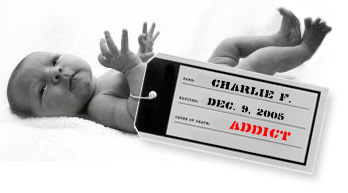
Can Adoption Create Addicts? | The Fix

Take a minute to read this article from The Fix.  It is an eye-opening account of the link between adoption and addiction. Can Adoption Create Addicts? | The Fix.

http://learn.genetics.utah.edu/content/addiction/genetics/

Photo courtesy of University of Utah

I have pondered this topic quite a bit.  In the book The Primal Wound author Nancy Newton Verrier suggests a link between adult adoptee behavior and our relinquishment.

Research presented in The Primal Wound also suggests that the lifelong effects of adoption on behavior are worse when a child is removed from its biological mother at birth. This is due to the pre-speech nature of the wound.  When a child experiences pain and cannot express it verbally, it becomes a deep-seated fissure in human personality.

I know a lot of adoptees who have experienced drug and food addictions, but is it cause and effect? Or is it merely coincidental? What do you think? Does adoption cause addiction? Please share your thoughts and experiences using the comment link below.

Blessings for a healing honest exchange,
Vicki-lynn

MPNnow News: Adult Adoptees seek Answers

Sharing a wonderful article from MPNnow.com on one adoptee’s need to know and pending NY legislation that would allow adult adoptees equal access to their Original Birth Certificates (OBC’s).

Adult adoptees seek answers

Adults adopted as children hope for legislation to make it easier to learn about their birth parents

Only first page of article is shared below. Read the rest at MPNnow.com: http://www.mpnnow.com/topstories/x1910063270/Adult-adoptees-seek-answers#ixzz2VRwOwqC1

A card in Dottie O’Neill Marble’s baby book read: “I wasn’t expected, I was selected.”

Marble’s adoption shortly after she was born was never a secret, said the 42-year-old East Bloomfield resident — but details of her past were a secret.

“My adoptive mom was very supportive,” said Marble. In her teen years, Marble said she began placing ads in newspapers in hopes of finding her birth mother. “It was an overwhelming feeling of not knowing who you really are,” she said.

A possible solution to her identity crisis came one day in 1995 when she got a call from someone with information about a baby born at Genesee Hospital on Sept. 19, 1970, a girl given up for adoption. It led to an eventual meeting with a woman Marble believes is her birth mother.

“It closed a big hole for me,” said Marble, one of a growing number of adoptees and others seeking more openness in the New York state adoption law.

While Marble’s efforts led to some sense of closure — as well as connecting with a grandmother and an extended family she didn’t know before — it also called attention to New York’s adoption law that prevents adoptees from obtaining an original birth certificate to learn about their past.

Proposed legislation in Albany addressing this issue is called the Bill of Adoptee Rights. It clarifies language and procedures for obtaining birth certificates and medical histories of adoptees; permits an adopted adult to access certain records when they reach the age of 18; and creates a contact preference to be filed by birth parents, giving those parents the right to state whether or not they want contact with the child.

“Right now, any adopted adult over the age of 18 cannot get access to their own birth certificate, and this creates obvious problems for the adopted adult,” said Assembly Minority Leader Brian Kolb, R-Canandaigua. Kolb is a sponsor of the bill.

“This is an important bill to remedy that, and I believe they have a right to know and a right to gain access so they can meet the many identification requirements they have to provide their birth certificate for in their adult life,” he said.

Marble said that while the current law protects parents who give up a baby for adoption, it leaves the adopted person “without any rights.” When she sought to find her birth mother, “I wasn’t out to disrupt anyone’s life,” she said. What she did want was the truth about where she came from and to be able to provide that information to her own children, she said.

Read the rest at: http://www.mpnnow.com/topstories/x1910063270/Adult-adoptees-seek-answers#ixzz2VRwHUveJ

Blessings for equal access,

Vicki-lynn

Help pass NY Adoption Legislation for Adoptee Access to Birth Records

NEWS10 ABC reported yesterday on Legislation that would give adoptees access to birth records. What a wonderful way to head into Mother’s Day weekend!

However, we can’t sit back and celebrate just yet. The New York Statewide Adoption Reform Unsealed Initiative needs your help to make sure this life-altering Adoption legislation passes the Senate.  Call your friends, share and please do whatever you can to make equal access the law in New York.

Below are details from the New York Statewide Adoption Reform Unsealed Initiative  site explaining what you can do right now.New York unsealed initiative

“Contact your legislators in their District Offices. To learn who your state assembly member and senator are, call the Albany switchboard at: 518 455-4218. The phone number in New York City for the League of Women Voters is (212) 725-3541. There are 150 assembly members and the link to the assembly website is http://assembly.state.ny.us
There are 62 state senators. One way to find out who your senator is is by logging on to the senate site, www.senate.state.ny.us
We now have 75 assembly sponsors. Although we have 16 in the senate, we are very hopeful for the future. With more interest and more of us committed to lobby in Albany next session, we are determined to win.
 
A written letter (snail mail) is of more importance with many legislators. However, some value emails. If your email does not get through, go to SEARCH and type in the name of the legislator for access to their website, as many have their own sites. Then send an email from the site. Be sure to include your address and phone number in your mail.A new law recently signed by Governor Cuomo extends participation in the adoption registry to include adult adoptees born in other states but adopted in New York. At last they can obtain non-identifying information from the registry the same as adult adoptees born in the state.”

Let’s go New York adoption triad members!
Let’s get this long overdue legislation passed!

Blessings for making the dream of equal access a reality,

Vicki-lynn